
Free Resource
Make the Right Choice for Your Next Roofing Project
Download the Free TPO vs. PVC Material Analysis
In the commercial single-ply market, TPO (Thermoplastic Polyolefin) and PVC (Polyvinyl Chloride) are the two dominant white membrane options. While TPO is often positioned as a budget-friendly alternative, a deeper analysis of chemical composition, fire resistance, and lifecycle maintenance reveals significant performance gaps.
This technical comparison provides the data you need to make an informed Return on Investment (ROI) decision for your specific facility and use case.
Formulation Stability & Proven History
•PVC (The Proven Standard): As the original weldable single-ply membrane, PVC has a track record dating to the 1960s. The formulation is mature and stable, with documented cases of PVC roofs performing for over 30 years.
•TPO (The Newer Technology): Introduced in the 1990s, TPO formulations have been historically unstable. Manufacturers have had to reformulate the product multiple times to address premature cracking, making long-term predictability difficult.
Fire Resistance & Safety
•PVC (Naturally Self-Extinguishing): Due to its high chlorine content, PVC is inherently fire-resistant. It is difficult to ignite and stops burning once the flame source is removed.
•TPO (Combustible): The base polymers in TPO are naturally combustible. To achieve a Class A fire rating, large amounts of fire-retardant chemicals must be added, which can compromise performance if not perfectly dispersed.
Download the Complete Comparison Matrix
To get the full analysis, including the 12-point comparison matrix and our final recommendation for the lowest long-term cost of ownership, enter your information below. The complete PDF report will be sent to your inbox instantly.
Chemical Resistance (The “Grease” Factor)
For buildings with rooftop HVAC units, exhaust vents, or manufacturing outputs, chemical resistance is a critical factor.
•PVC: Highly resistant to acids, bases, restaurant greases, animal fats, and oils. It is the industry standard for restaurants and food processing facilities.
•TPO: Vulnerable to hydrocarbons and organic fats. Exposure to grease or oil causes TPO to absorb the contaminant, swell, lose its physical properties, and eventually crack.
Long-Term Repairability (The “Weld Window”)
Commercial roofs require patches and alterations over their lifespan. The ease of these repairs dictates long-term maintenance costs.
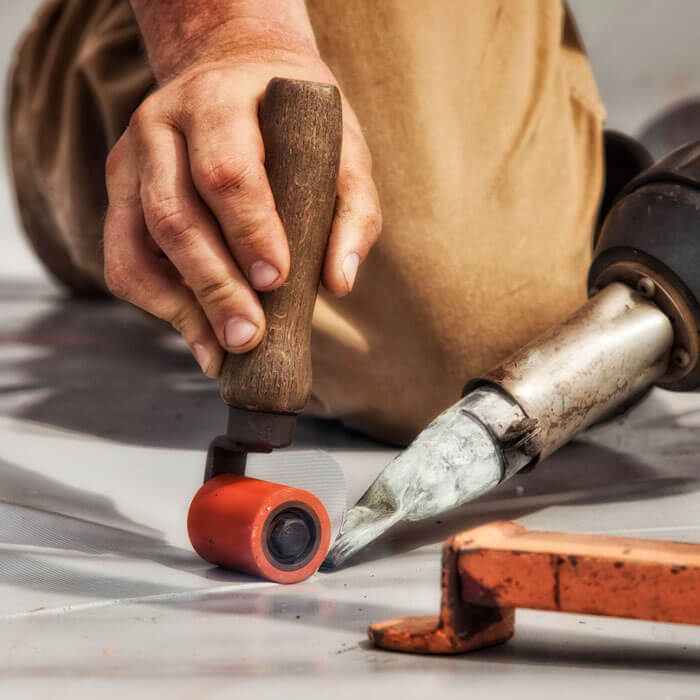
•PVC: Remains heat-weldable throughout its service life. A new piece of PVC can be welded to a 20-year-old PVC roof with a strong, permanent molecular bond.
•TPO: Suffers from surface oxidation. After 7-10 years, the surface weathers and becomes difficult to weld, often requiring aggressive abrasion and chemical primers that increase the risk of patch failure.
TRUSTED BY FACILITY MANAGERS ACROSS THE REGION
Exceptional Roofing has been protecting commercial properties across Tennessee, Kentucky, Indiana, and Southern Ohio for over 20 years. Our guides and resources are drawn directly from field experience and published research — the same expertise featured in Building Enclosure magazine. Download any of the free resources above to put that knowledge to work for your facility.
Professional Commercial Roofing Leader
Trust Exceptional Roofing LLC for comprehensive commercial roofing solutions, including repair, replacement and maintenance. We have the skills, tools, and experience to handle projects of any size.
Schedule Today